
Photo by NEOM
Compliance in California breaks into (1) entity maintenance (Secretary of State + Franchise Tax Board), and (2) operational compliance (employment, sales tax, local permits, etc.). Below is a practical checklist for corporations and LLCs “doing business” in CA (whether formed in CA or registered as foreign/out-of-state).
1) California Secretary of State (SOS): keep the entity in good standing
A. Maintain an Agent for Service of Process (registered agent)
- Both corporations and LLCs must keep a current CA agent and address on file; update promptly if it changes (typically via an updated Statement of Information).
B. File the Statement of Information (SOI)
- Corporation (most for-profit + registered foreign corps): initial SOI due within 90 days, then annually thereafter (in the 6‑month filing window tied to the registration month).
- LLC (domestic + registered foreign LLCs): initial SOI due within 90 days, then biennially (every 2 years) in the applicable 6‑month filing window.
- SOS warns late/non-filing can lead to penalties and potential suspension/forfeiture.
2) California Franchise Tax Board (FTB): tax registration + annual filings
A. Minimum franchise tax / entity taxes
- Most CA LLCs and corporations owe California taxes/returns; many entities are subject to the well-known minimum franchise tax rules and entity returns. (Exact amounts/exemptions can change by year—confirm your entity type and start date with FTB or your tax advisor.)
B. File required state tax returns
- Typical examples: CA corporate return (e.g., Form 100/100S depending on tax classification) or LLC return/fee forms (depending on classification and receipts).
- Noncompliance can trigger suspension (which can restrict the entity’s ability to lawfully do business, enforce contracts, etc.). The SOS also notes FTB suspension/forfeiture consequences in its SOI guidance.
3) If formed outside California: “foreign” qualification/registration
If you’re incorporated/organized elsewhere but “doing business” in CA, you generally must register/qualify first.
- Foreign corporation: must obtain a certificate of qualification before transacting intrastate business.
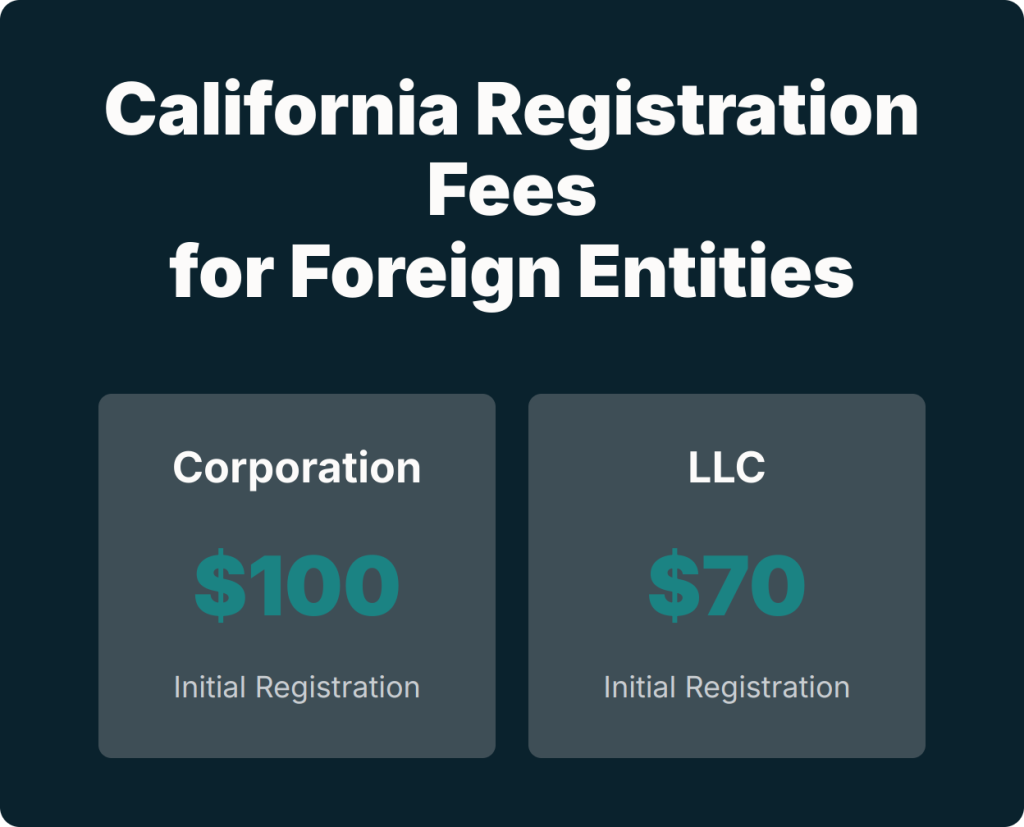
- Foreign LLC: must register with CA SOS (via the foreign LLC registration process) and then comply with the same SOI cadence (biennial) and CA tax obligations.
4) Employment compliance (if you have workers in CA)
If you hire employees in CA, key ongoing requirements include:
- Register for CA payroll taxes and file wage reports/returns through the Employment Development Department.
- New hire reporting: report new/rehired employees to the CA New Employee Registry within 20 days of the first day of work.
- Workers’ compensation insurance is generally required for employees.
5) Sales tax / seller’s permit (if selling taxable tangible goods)
If you sell/lease tangible personal property in CA that’s ordinarily subject to sales tax, you generally must obtain a seller’s permit and collect/remit sales/use tax through CDTFA.
6) Local licensing + DBAs (fictitious business name)
- Local permits/business licenses: many cities/counties require a local business license/tax certificate depending on location/activity (zoning, health permits, etc.).
DBA/FBN: if the corporation/LLC operates under a name different from its exact legal name, you typically file a Fictitious Business Name with the county (often with publication requirements).
Are you asking for general requirements or a checklist for a specific business type (e.g., e‑commerce, consulting, construction, employer with payroll, etc.)? Yes Arizona Limited Liability Company owns real estate in Arizona, and the members are California Residents
An Arizona LLC that owns Arizona real estate can still trigger California compliance if California-resident members/managers are managing the LLC from California (even if the property is out of state). California looks at (1) whether the LLC is“doing business” for tax purposes, and (2) whether it must register as a foreign LLC for legal purposes.
1) California tax side (FTB): “doing business” can be triggered from California
California defines “doing business” broadly as actively engaging in any transaction for profit in California, and it also has bright-line thresholds for CA sales / property / payroll (indexed annually).
Importantly for your facts, the FTB says partnerships/LLCs treated as partnerships are considered doing business in CA if they have a member doing business on their behalf in California.
Practical impact: If the CA-resident members are making management decisions, signing/approving contracts, directing a property manager, bookkeeping, etc. from California on behalf of the AZ LLC, that can create CA “doing business” exposure for the LLC (often meaning CA return filing and potentially the $800 minimum tax—confirm specifics with your CPA).
2) California entity-law side (SOS): when must the AZ LLC register as a “foreign LLC”?
Separately from tax, CA generally requires a foreign LLC to register if it is“transacting intrastate business” in California (often described as repeated and successive transactions in CA, not just isolated acts).
If registration is required (or you choose to register), key ongoing items include:
- Foreign LLC registration application process under Corp. Code rules
- California Agent for Service of Process
- Statement of Information due within 90 days, then every 2 years thereafter
3) Member-level California income tax: CA residents are taxed on worldwide income
Even if the LLC itself ended up not being treated as “doing business” in CA, California residents generally must report and pay CA tax on rental income (net of expenses) even when the rental property is out of state.
4) What I need to answer “what must we do?” precisely (2 quick questions)
- Are any members/managers in California doing ongoing management (approving leases, paying bills, directing the AZ property manager, signing loan docs) from California?
- Is the LLC taxed as a partnership (multi-member default) or has it elected corporate/S-corp taxation?
If you answer those two, I can lay out a tighter “likely required vs likely not required” California compliance checklist (FTB filings, SOS registration decision, and what the CA resident members must report).
What are the compliance requirements for a corporation and Limited Liability Company doing business in California?
Compliance in California breaks into (1) entity maintenance (Secretary of State + Franchise Tax Board), and (2) operational compliance (employment, sales tax, local permits, etc.). Below is a practical checklist for corporations and LLCs “doing business” in CA (whether formed in CA or registered as foreign/out-of-state).
1) California Secretary of State (SOS): keep the entity in good standing
A. Maintain an Agent for Service of Process (registered agent)
- Both corporations and LLCs must keep a current CA agent and address on file; update promptly if it changes (typically via an updated Statement of Information).
B. File the Statement of Information (SOI)
- Corporation (most for-profit + registered foreign corps): initial SOI due within 90 days, then annually thereafter (in the 6‑month filing window tied to the registration month).
- LLC (domestic + registered foreign LLCs): initial SOI due within 90 days, then biennially (every 2 years) in the applicable 6‑month filing window.
- SOS warns late/non-filing can lead to penalties and potential suspension/forfeiture.
2) California Franchise Tax Board (FTB): tax registration + annual filings
A. Minimum franchise tax / entity taxes
- Most CA LLCs and corporations owe California taxes/returns; many entities are subject to the well-known minimum franchise tax rules and entity returns. (Exact amounts/exemptions can change by year—confirm your entity type and start date with FTB or your tax advisor.)
B. File required state tax returns
- Typical examples: CA corporate return (e.g., Form 100/100S depending on tax classification) or LLC return/fee forms (depending on classification and receipts).
- Noncompliance can trigger suspension (which can restrict the entity’s ability to lawfully do business, enforce contracts, etc.). The SOS also notes FTB suspension/forfeiture consequences in its SOI guidance.
3) If formed outside California: “foreign” qualification/registration
If you’re incorporated/organized elsewhere but “doing business” in CA, you generally must register/qualify first.
- Foreign corporation: must obtain a certificate of qualification before transacting intrastate business.
- Foreign LLC: must register with CA SOS (via the foreign LLC registration process) and then comply with the same SOI cadence (biennial) and CA tax obligations.
4) Employment compliance (if you have workers in CA)
If you hire employees in CA, key ongoing requirements include:
- Register for CA payroll taxes and file wage reports/returns through the Employment Development Department.
- New hire reporting: report new/rehired employees to the CA New Employee Registry within 20 days of the first day of work.
- Workers’ compensation insurance is generally required for employees.
5) Sales tax / seller’s permit (if selling taxable tangible goods)
If you sell/lease tangible personal property in CA that’s ordinarily subject to sales tax, you generally must obtain a seller’s permit and collect/remit sales/use tax through CDTFA.
6) Local licensing + DBAs (fictitious business name)
- Local permits/business licenses: many cities/counties require a local business license/tax certificate depending on location/activity (zoning, health permits, etc.).
- DBA/FBN: if the corporation/LLC operates under a name different from its exact legal name, you typically file a Fictitious Business Name with the county (often with publication requirements).
Two quick clarifiers (so I can tailor this to your situation)
- Is the entity formed in CA or formed elsewhere (foreign)?
Are you asking for general requirements or a checklist for a specific business type (e.g., e‑commerce, consulting, construction, employer with payroll, etc.)? Yes Arizona Limited Liability Company owns real estate in Arizona, and the members are California Residents
An Arizona LLC that owns Arizona real estate can still trigger California compliance if California-resident members/managers are managing the LLC from California (even if the property is out of state). California looks at (1) whether the LLC is“doing business” for tax purposes, and (2) whether it must register as a foreign LLC for legal purposes.
1) California tax side (FTB): “doing business” can be triggered from California
California defines “doing business” broadly as actively engaging in any transaction for profit in California, and it also has bright-line thresholds for CA sales / property / payroll (indexed annually).
Importantly for your facts, the FTB says partnerships/LLCs treated as partnerships are considered doing business in CA if they have a member doing business on their behalf in California.
Practical impact: If the CA-resident members are making management decisions, signing/approving contracts, directing a property manager, bookkeeping, etc. from California on behalf of the AZ LLC, that can create CA “doing business” exposure for the LLC (often meaning CA return filing and potentially the $800 minimum tax—confirm specifics with your CPA).
2) California entity-law side (SOS): when must the AZ LLC register as a “foreign LLC”?
Separately from tax, CA generally requires a foreign LLC to register if it is“transacting intrastate business” in California (often described as repeated and successive transactions in CA, not just isolated acts).
If registration is required (or you choose to register), key ongoing items include:
- Foreign LLC registration application process under Corp. Code rules
- California Agent for Service of Process
- Statement of Information due within 90 days, then every 2 years thereafter
3) Member-level California income tax: CA residents are taxed on worldwide income
Even if the LLC itself ended up not being treated as “doing business” in CA, California residents generally must report and pay CA tax on rental income (net of expenses) even when the rental property is out of state.
4) What I need to answer “what must we do?” precisely (2 quick questions)
- Are any members/managers in California doing ongoing management (approving leases, paying bills, directing the AZ property manager, signing loan docs) from California?
- Is the LLC taxed as a partnership (multi-member default) or has it elected corporate/S-corp taxation?
If you answer those two, I can lay out a tighter “likely required vs likely not required” California compliance checklist (FTB filings, SOS registration decision, and what the CA resident members must report).