








We provide Information for the operation of Your Business Here is a sample of the kind of information we are providing on this website.
| What are the IRS rules for employees using a company credit card for a company credit card? The IRS focus is less about the card itself and more about whether the charges are properly substantiated business expenses (so they’re not treated as taxable wages to the employee). | Effective management is about helping people do their best work through clarity, support, and accountability. In practice, that means communicating expectations early, keeping employees engaged, leading consistently, and using evidence (not hunches) to guide decisions. Strong managers set clear goals, delegate in a way that develops people, give timely feedback, and recognize progress. They also build trust through transparency and invest in professional growth, so the team improves over time |
| Compliance in California breaks into (1) entity maintenance (Secretary of State + Franchise Tax Board), and (2) operational compliance (employment, sales tax, local permits, etc.). Below is a practical checklist for corporations and LLCs “doing business” in CA (whether formed in CA or registered as foreign/out-of-state). | Transforming costs into profits means reducing or reshaping spending in ways that improve cash flow and then reinvesting part of the savings into initiatives that grow revenue or productivity. Done well, cost programs often improve operating margin quickly because savings hit the bottom line faster than new sales. |
| A California shareholder/member/partner (by itself) usually does not automatically force an out‑of‑state entity to register in California. The out‑of‑state entity generally must register only if the entity is “doing business” (a.k.a. “transacting intrastate business”) in California—for example, it has ongoing in‑state operations, employees/agents working in CA, offices/property in CA, or repeated in‑state transactions. | Strategic Planning Excellence The primary reasons people start a small business in California stem from both personal motivations and the state’s unique, robust economic landscape |
| File the Statement of Information (SOI) Corporation (most for-profit + registered foreign corps): initial SOI due within 90 days, then annually thereafter (in the 6‑month filing window tied to the registration month). LLC (domestic + registered foreign LLCs): initial SOI due within 90 days, then biennially (every 2 years) in the applicable 6‑month filing window. SOS warns late/non-filing can lead to penalties and potential suspension/forfeiture. |
Innovative Business Practices Discover how our innovative business practices enhance efficiency, reduce costs, and maximize profitability, transforming your organization into a leader in the market. |
| Minimum franchise tax / entity taxes Most CA LLCs and corporations owe California taxes/returns; many entities are subject to the well-known minimum franchise tax rules and entity returns. (Exact amounts/exemptions can change by year—confirm your entity type and start date with FTB or your tax advisor.) |
Insurance How does business liability work for a business, what limits mean? What can you expect to be reimbursed when a loss occurs? Business liability insurance is there to protect your business when a third party (customer, vendor, member of the public, landlord, etc.) claims your business caused them bodily injury, property damage, or certain “personal/advertising” injuries (like libel/slander in limited situations). It generally pays two big buckets: |

Compliance Information for California Businesses
At‑a‑glance checklist (California EDD for S‑Corporations):
- Register with EDD and obtain your CA Employer Payroll Tax Account Number (typically within 15 days of paying subject wages).
- Run payroll for all employees—including shareholder‑officers who perform services—and withhold/remit SDI and PIT.
- Pay employer payroll taxes (UI and ETT) and track annual wage bases and rate notices.
- File quarterly returns: DE 9 (summary) and DE 9C (employee wage detail), even for “zero payroll” quarters if required for your account status.
- Make timely deposits using your assigned deposit schedule (SDI/PIT frequency varies; UI/ETT generally quarterly).
- Report new hires and rehires (generally within 20 days) and report certain independent contractors when a 1099 is required.
- Classify workers correctly (employee vs. independent contractor) to avoid assessments, penalties, and interest.
- Keep payroll records and respond promptly to EDD notices, audits, or account updates.
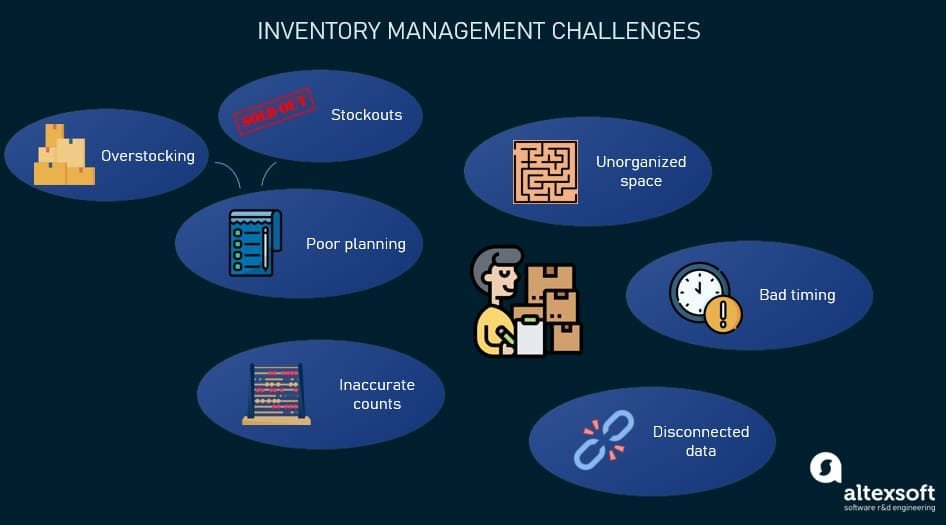
Inventory Costing Systems in Accounting Software (Descriptions)
Accounting software typically supports two related choices: (1) an inventory tracking system (how often inventory and cost of goods sold are updated) and (2) an inventory costing/valuation method (the cost flow assumption used to assign costs to units sold and units remaining).
1) Inventory tracking systems
- Perpetual inventory system: Inventory quantities and values are updated continuously as purchases, sales, returns, and adjustments occur, giving near real-time inventory valuation and cost of goods sold.
- Periodic inventory system: Inventory valuation is updated at set intervals (e.g., month/quarter/year) based on a physical count; cost of goods sold is calculated at period-end rather than per sale.
2) Inventory costing / valuation methods
- FIFO (First-In, First-Out): Assumes the oldest inventory costs are issued to cost of goods sold first; ending inventory reflects the most recent purchase/production costs.
- LIFO (Last-In, First-Out): Assumes the most recent inventory costs are issued to cost of goods sold first; ending inventory reflects older cost layers (commonly restricted or unavailable under IFRS).
- Weighted Average Cost (WAC): Uses an average unit cost (total cost of units available ÷ total units available) to value both cost of goods sold and ending inventory for the period.
- Moving Average (Perpetual average): Recalculates the average unit cost after each purchase/receipt event, so issues/sales use the latest moving-average cost (often paired with a perpetual inventory system).
- Specific Identification: Tracks the actual cost of each specific unit (by serial number, lot/batch, or unique ID) and assigns that exact cost to the unit sold—common for high-value or uniquely identifiable items.
- Standard Cost: Values inventory at predetermined “standard” costs; differences between actual costs and standards are posted to variance accounts (e.g., purchase price or production variances) for analysis.
- Retail Inventory Method: Estimates ending inventory cost from retail selling prices reduced by an average gross margin; often used by retailers with high SKU volume where unit-cost tracking is impractical.
Implementation note: Most systems require you to pick a method per item (or per inventory organization) and apply it consistently for comparable inventory; many also support landed cost allocation (freight/duties) and audit trails for cost adjustments.
About us
We are offering a complimentary consultation to provide a more personalized plan for your business

Opening Hours
Monday – Friday: 9:00 AM – 5:00 PM
Saturday – Sunday: By Appointment
Closed on Public Holidays